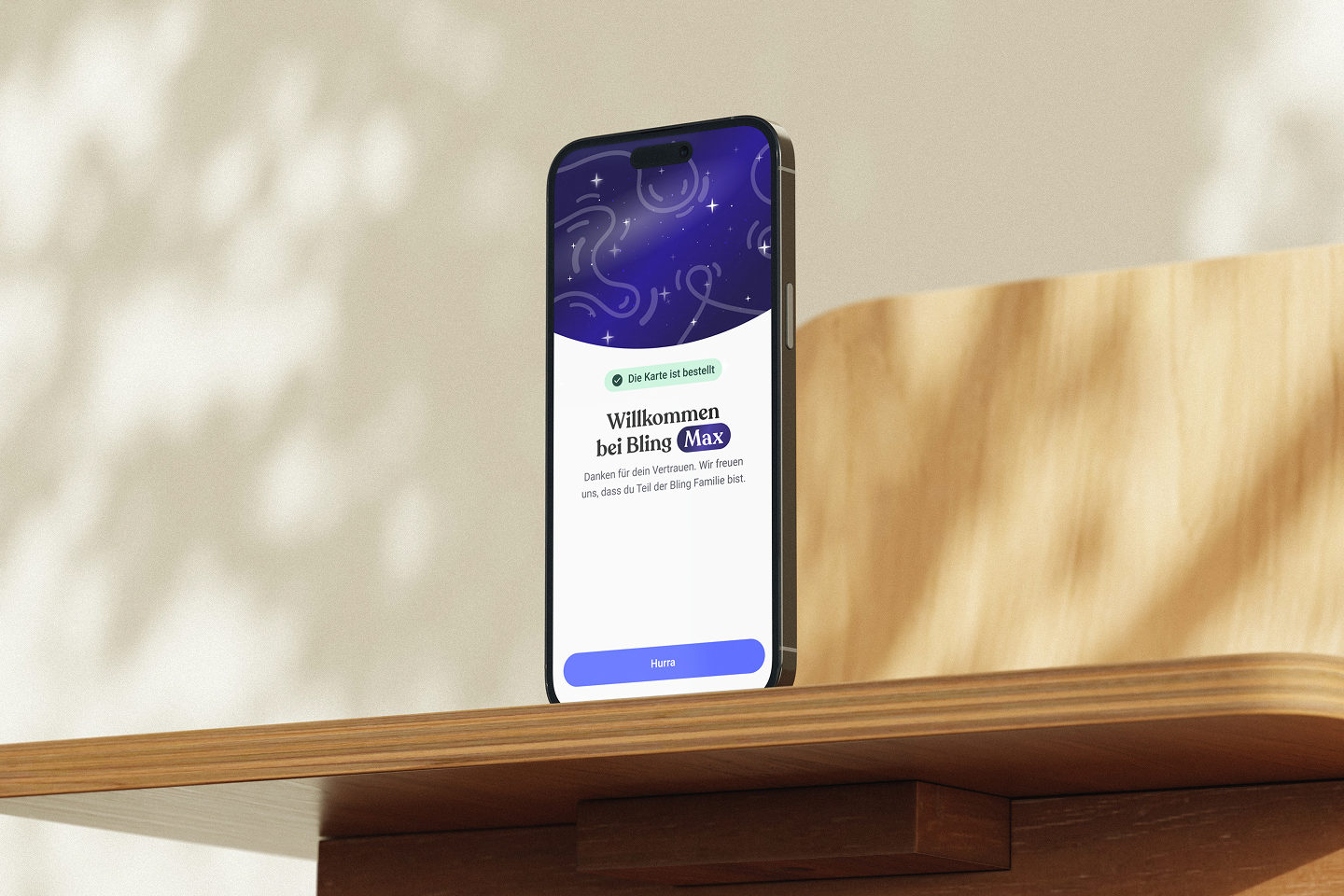
I designed a personalized onboarding experience that removed decision-making effort through automatically generated savings recommendations.
I integrated the saving flow into onboarding experience
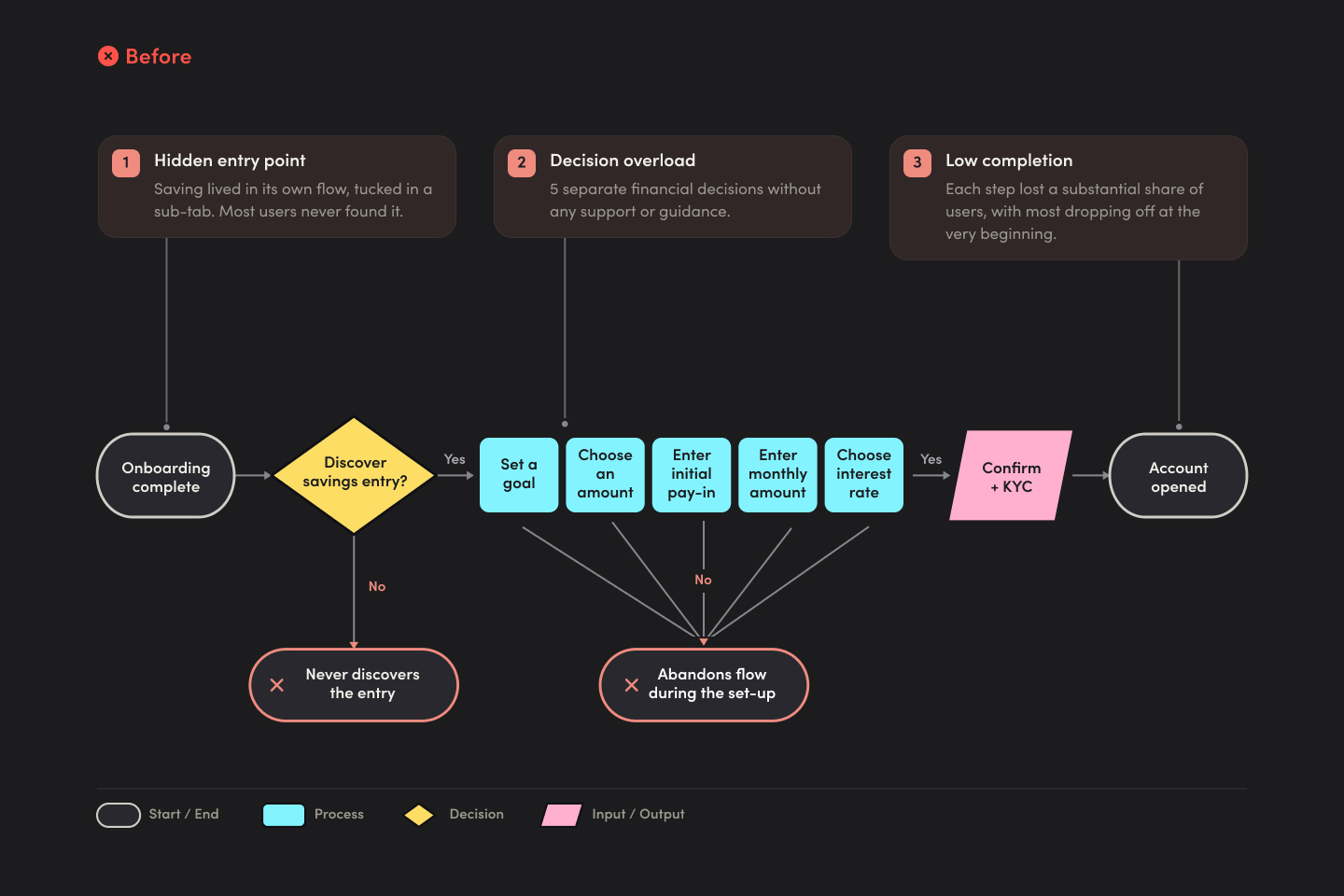
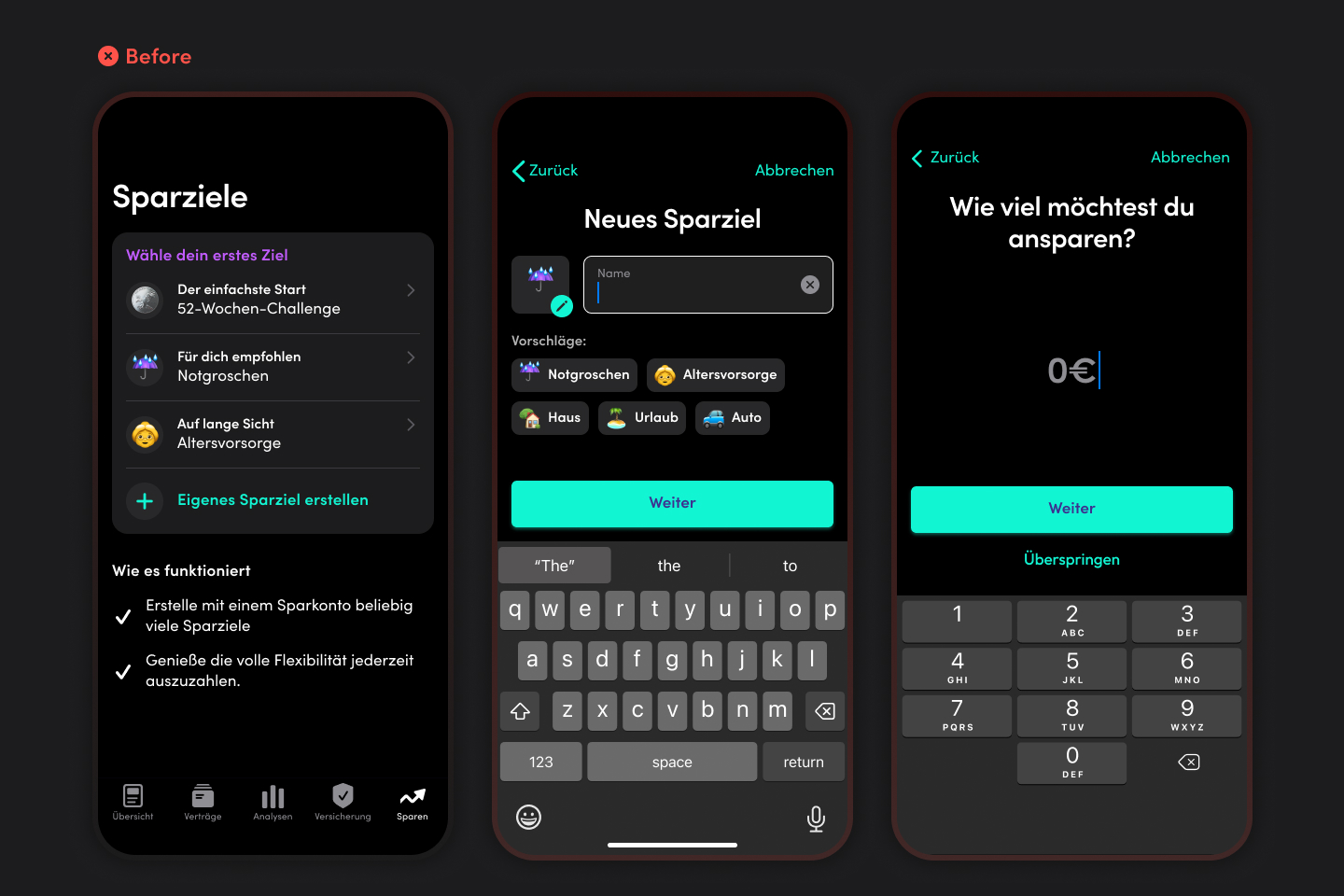
🚩 Before: The savings goal flow was hidden inside another feature and relied on users taking action independently, offering limited support for those who found saving difficult.
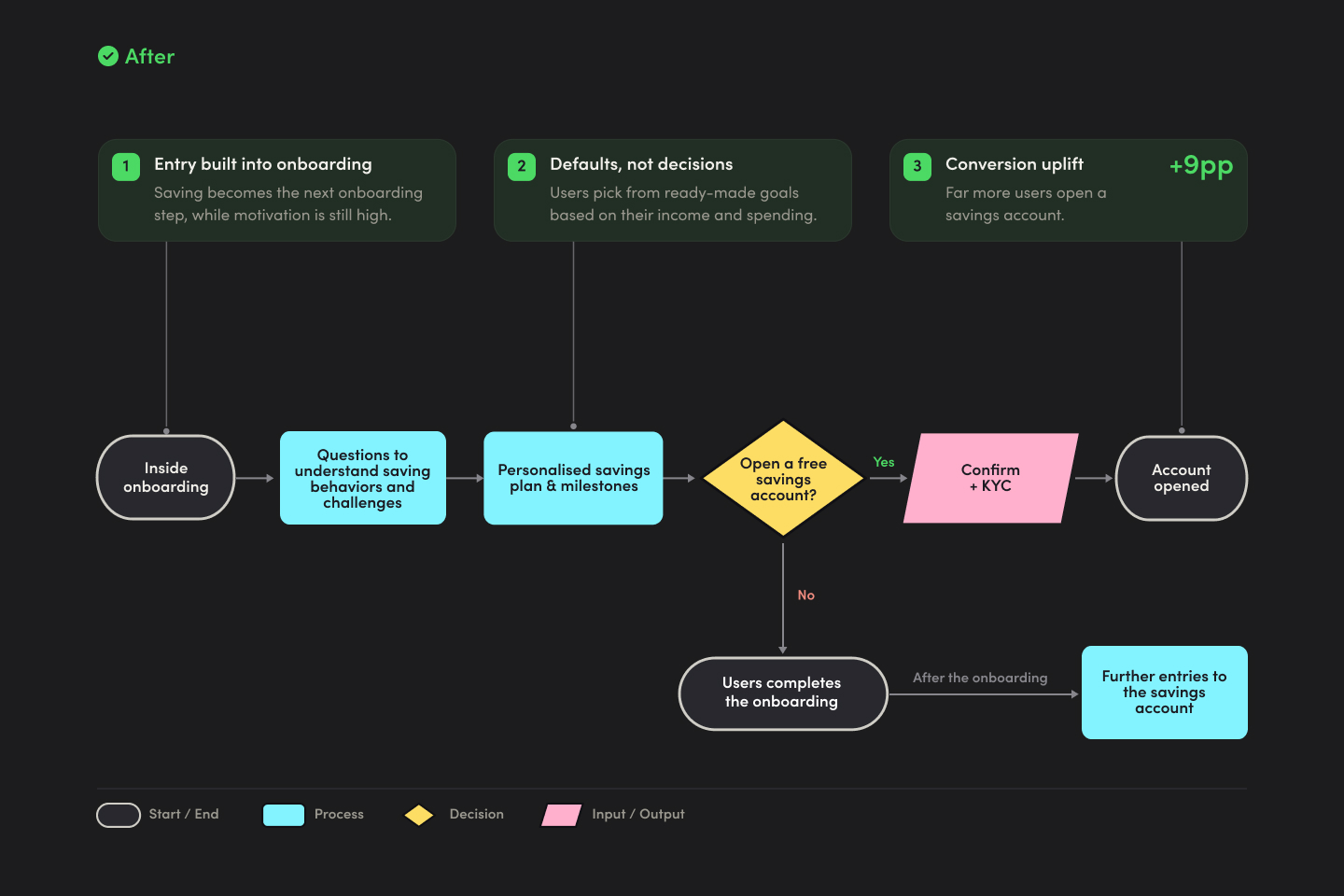
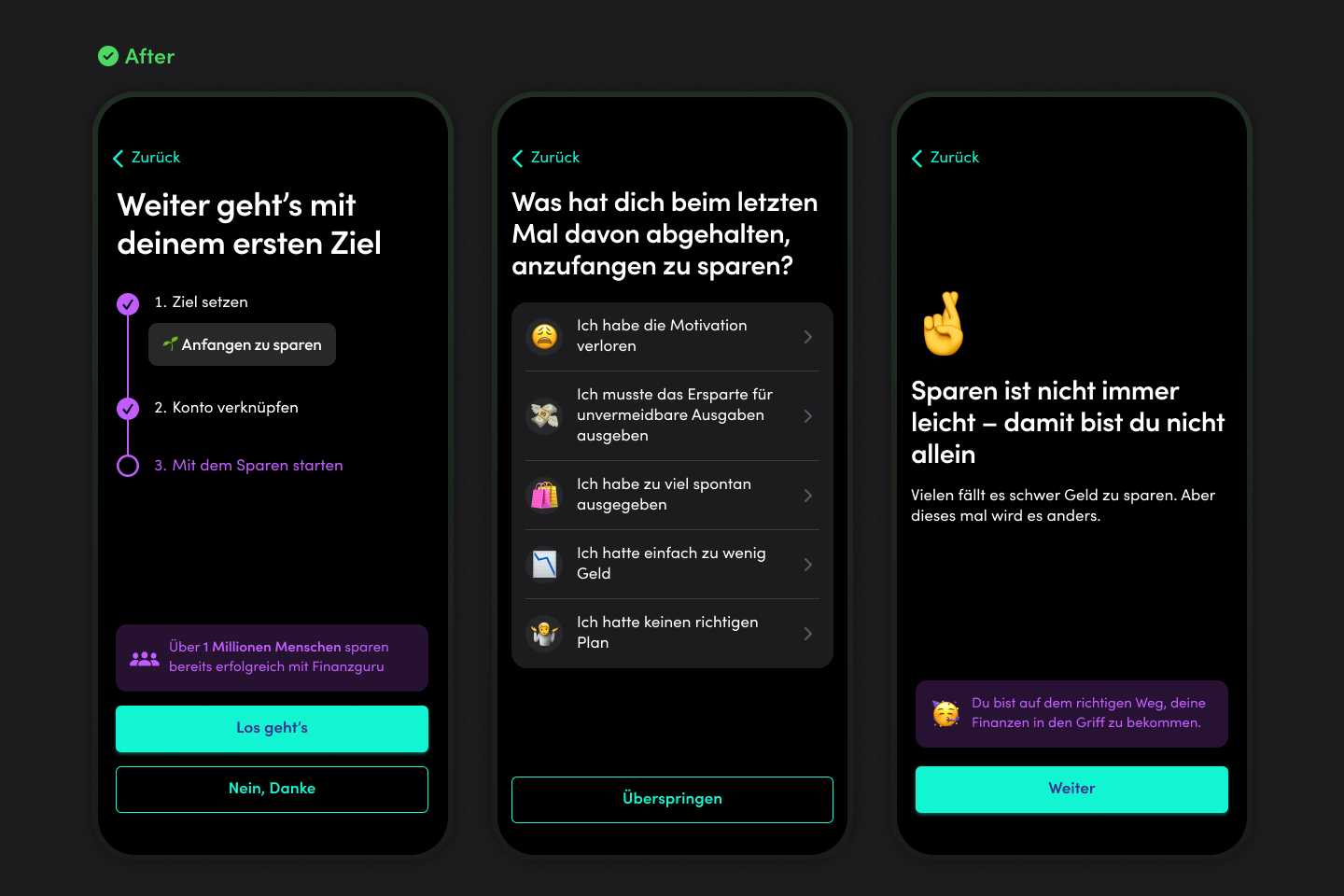
✅ After: The saving flow is part of the onboarding for users who selected “I want to start saving” as their primary goal. This surfaced the feature earlier in the journey, making it easier to find and helping users act on their saving goals from the start.
More support and empathy during the saving journey
🚩 Before: Users were asked to choose a savings goal, name it, and set a target amount upfront. This assumed users were already motivated and confident, leading to high drop-off rates.
✅ After: Before setting up a savings goal, I asked users about their past experiences with saving and acknowledged that it can be difficult. This created a more supportive experience and helped users feel understood before committing to a goal.
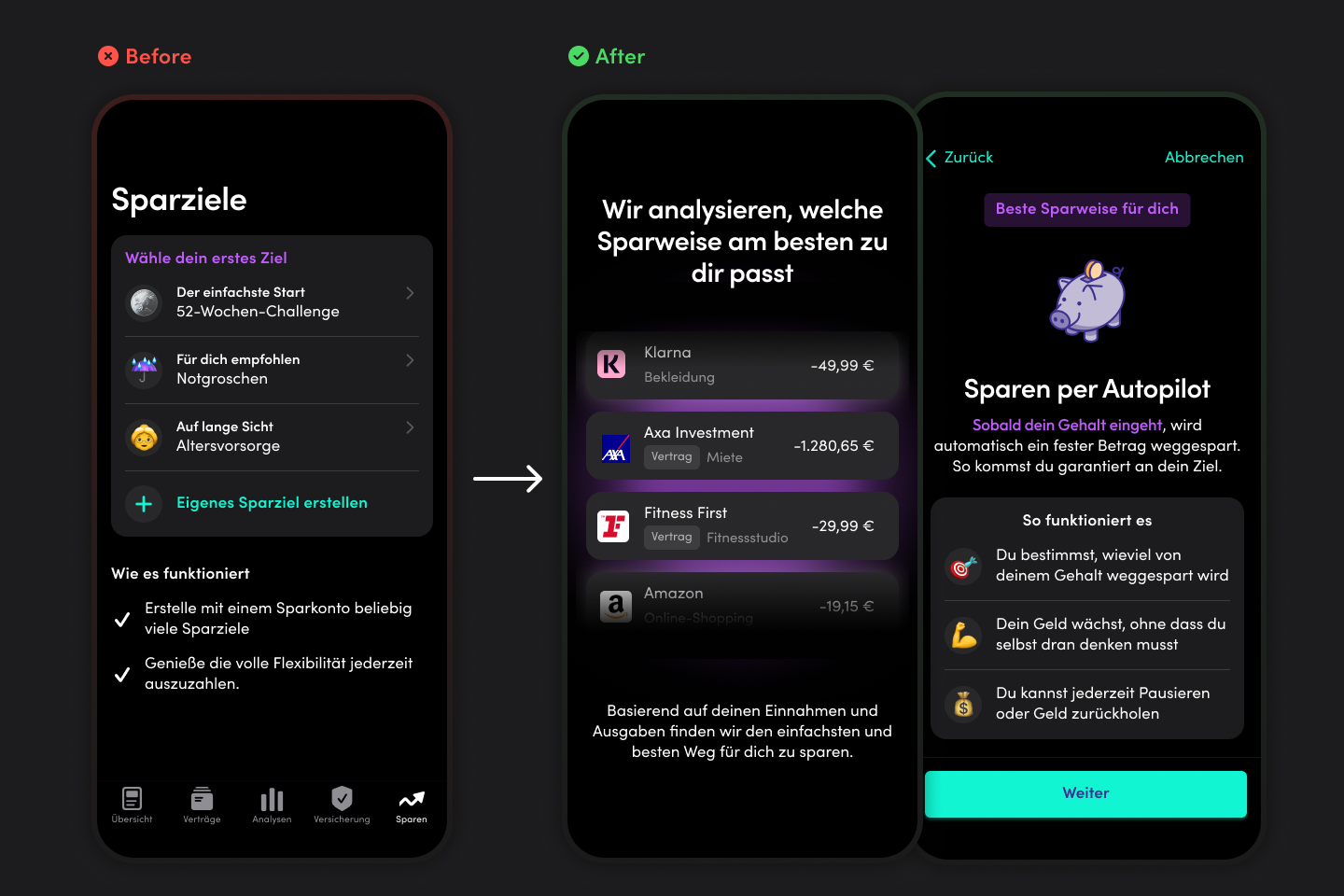
Personalized savings goals based on user data
🚩 Before: Users had to evaluate different savings options and decide which goal suited them best. This created decision fatigue and led to low click-through rates.
🚀 Outcome: I used users’ spending and saving habits to recommend a savings strategy tailored to their needs. This reduced decision-making effort and decreased churn.
Personalized goal amount and gamification
🚩 Before: Users had to estimate for themselves how much they could realistically save each month. This required extra effort and created uncertainty during the setup process.
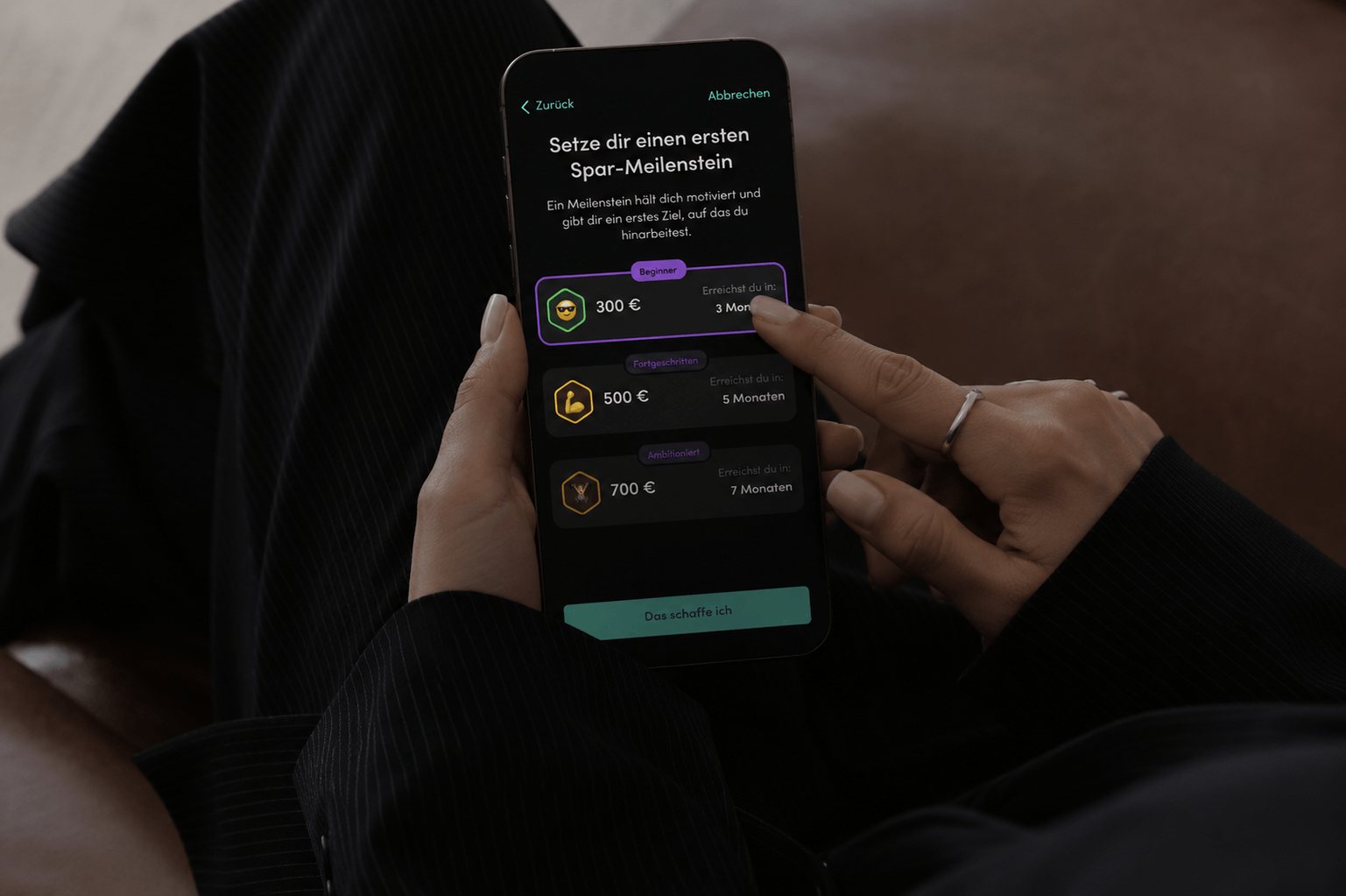
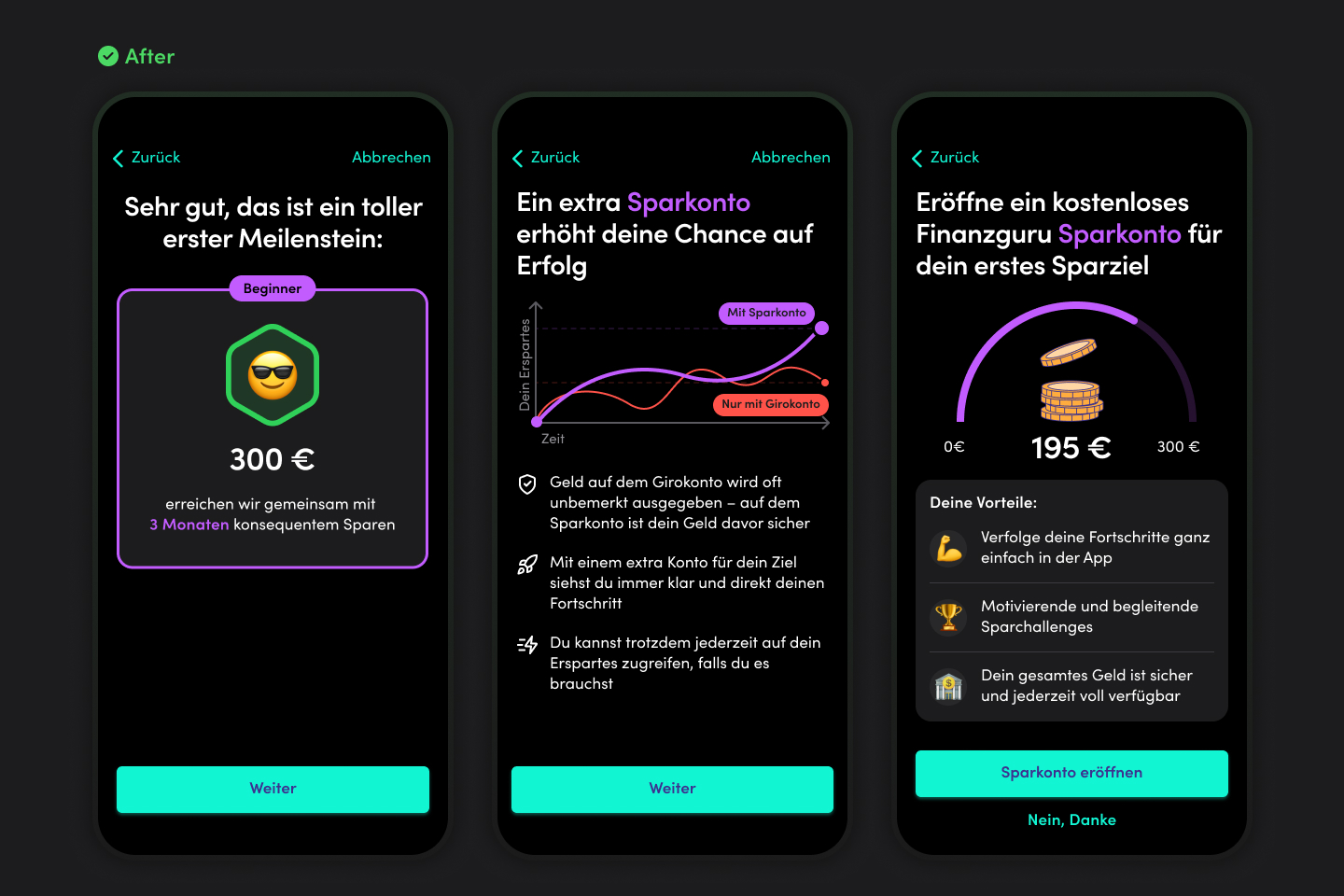
🚀 Outcome: Using users’ average income and expenses, we suggested a monthly savings amount tailored to their financial situation. We then introduced milestones to make progress more tangible and motivating.
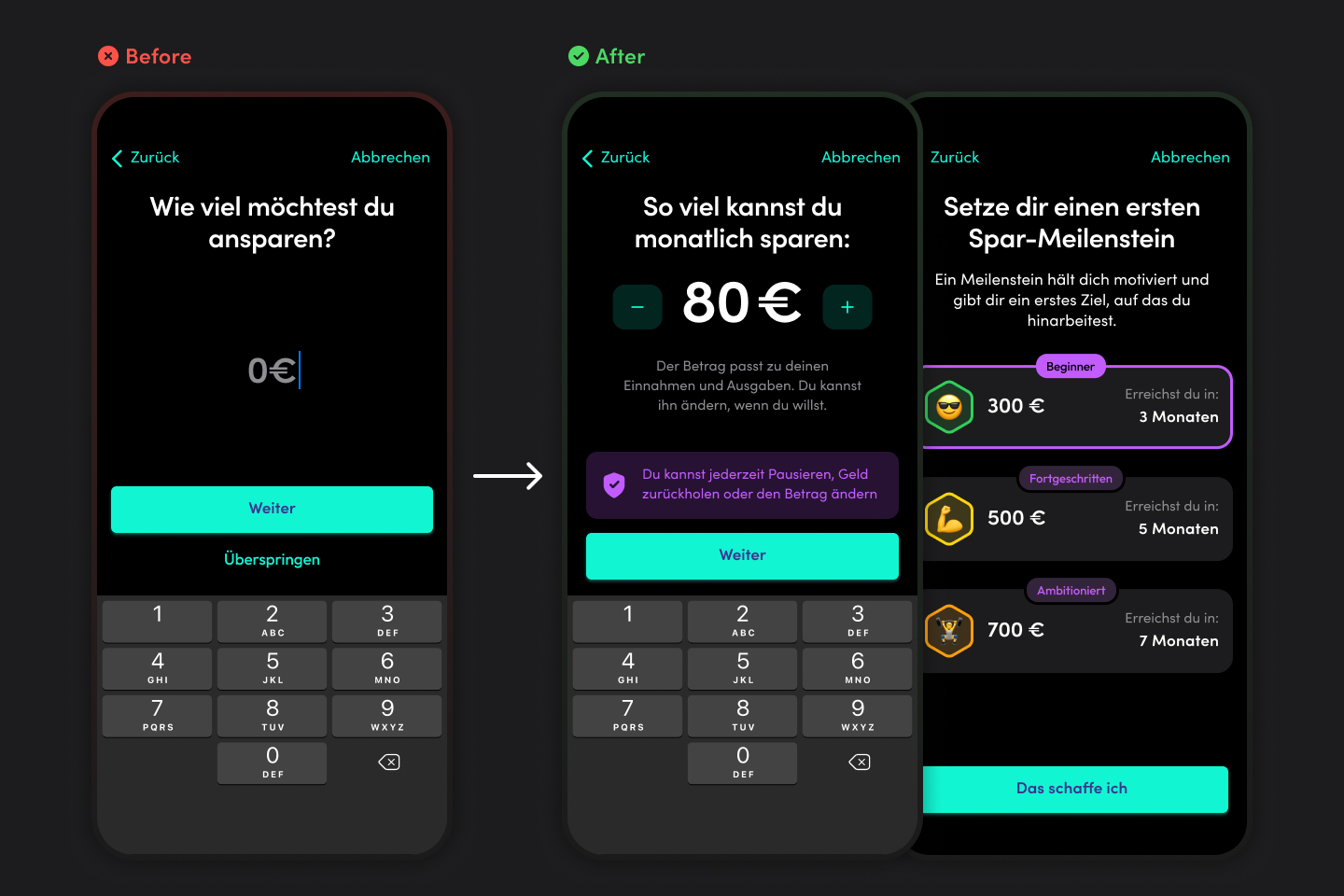
More empathy and support through simple language
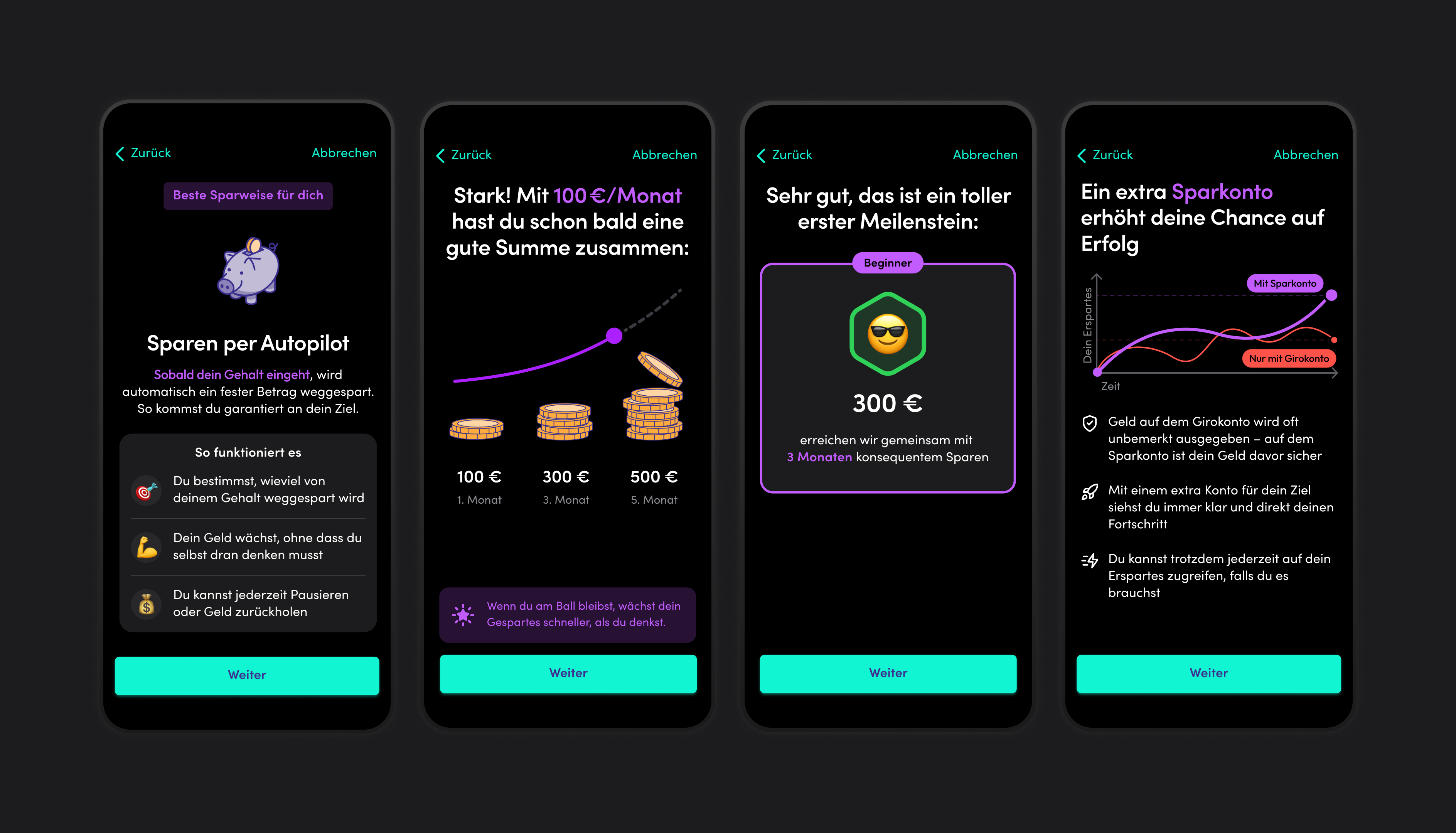
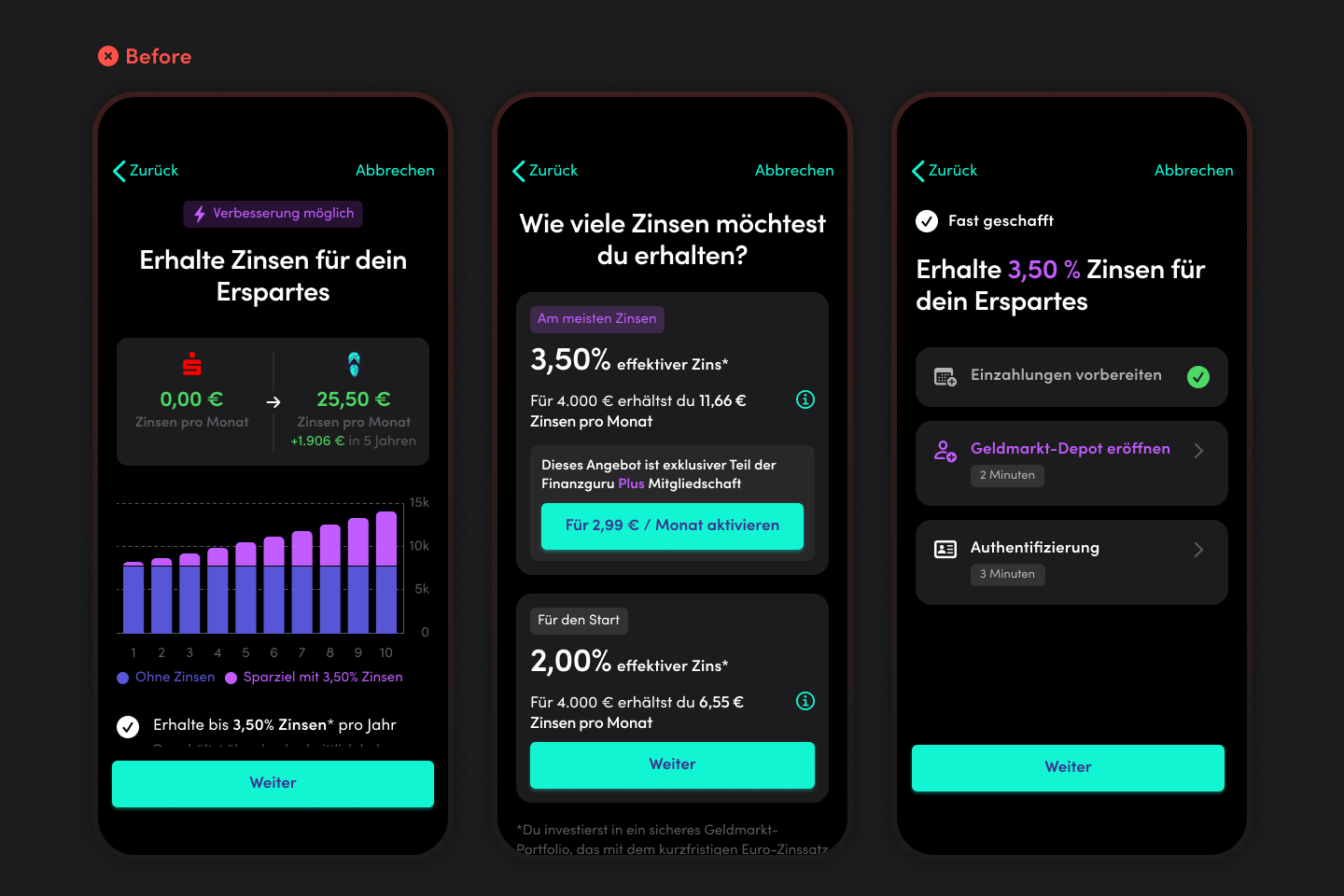
🚩 Before: The flow relied heavily on financial terminology and required users to estimate potential savings on their own. The benefits of opening a separate savings account were not clearly explained.
🚀 Outcome: We replaced technical explanations with clear, user-focused messaging that explained the benefits of a savings account in a relevant and accessible way. This helped users make informed decisions and increased conversion, even without additional interest incentives.
1—Meet users when motivation is highest
Features are most effective when introduced at the moment of strongest user intent. Connecting the savings experience to users’ goals and providing emotional support increased engagement and adoption.
2—Reduced cognitive effort can beat incentives
Users don’t come to financial products to do more calculations. Personalized recommendations and pre-filled suggestions reduced cognitive effort and drove stronger conversion than additional financial incentives.

.png)
.png)